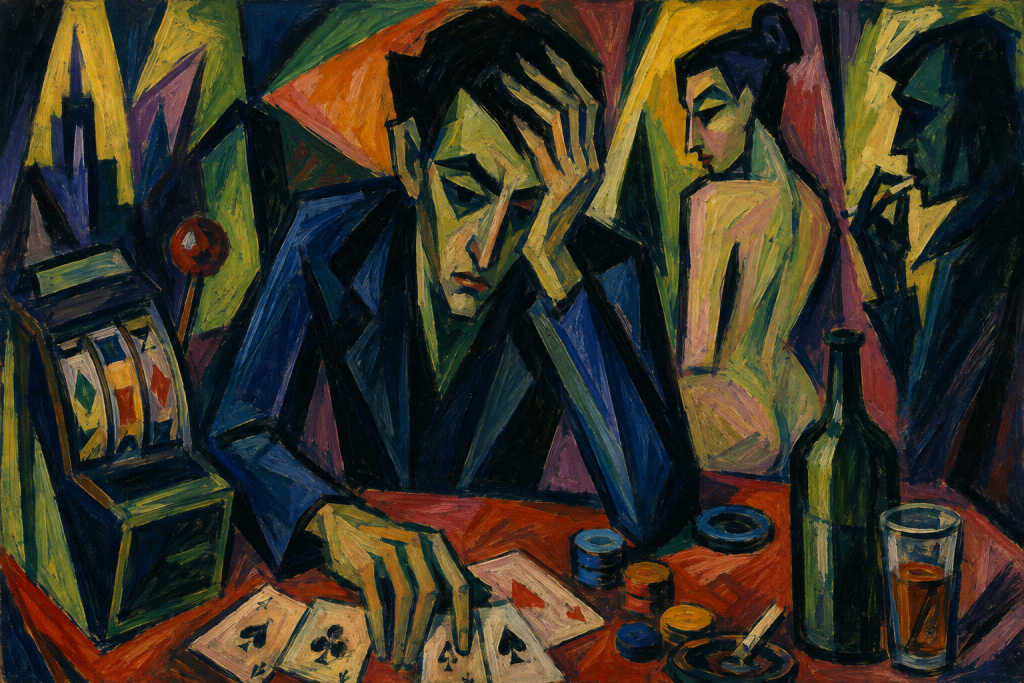
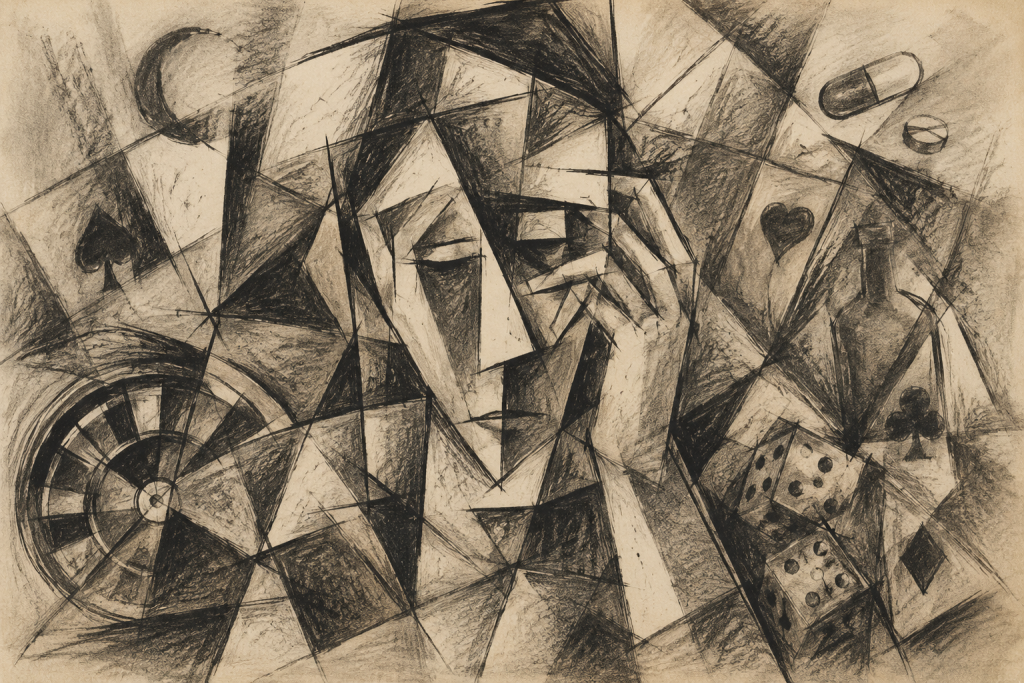
Why gambling addiction can sometimes coexist with alcohol, drug, or other addictions, what role family patterns may play, and which signs can indicate that gambling is becoming a serious problem
developing other addictions as well.
This also applies to gambling addiction. Some people who experience problems with gambling may also struggle with alcohol or drug use.
However, having a gambling addiction does not necessarily mean that a person will develop another addiction.
Why One Addiction Does Not Necessarily Lead to Another
Some people with gambling addiction never develop problems with alcohol, drugs, or other forms of addictive behavior.
One possible reason is that no other substance or activity produces the same experiences and sensations they get from gambling.
For such a person, gambling itself becomes the main source of intense emotional arousal, anticipation, risk, and hope of winning.
That is why it is important not only to consider the presence of addiction itself, but also to understand what psychological function it serves in a particular person’s life.
Gambling Addiction and Family Patterns
Research also points to certain family patterns.
Many people who struggle with gambling problems report that one or both of their parents had problems with alcohol, gambling, or other forms of addictive behavior.
This does not mean that addiction is inevitably passed from parents to children.
However, the family environment, ways of coping with stress, attitudes toward risk, money, alcohol, and gambling, as well as behavioral patterns learned in childhood, may influence the later development of addictive behavior.
That is why, when working with gambling addiction, it can sometimes be important to consider not only the individual, but also their family history.
How Common Is Gambling Addiction?
Gambling is available to millions of people, but gambling addiction develops in only a minority of them.
Most people are able to treat gambling as entertainment and maintain control over the amount of time and money they spend.
A problem begins when gambling starts taking up more and more space in a person’s life and gradually pushes aside other interests, responsibilities, and relationships.
Signs that gambling may be developing into an addiction include:
- persistent thoughts about gambling;
- increasing the size of bets;
- trying to win back money after losses;
- being unable to stop at the planned time;
- hiding gambling behavior from loved ones;
- debts and financial difficulties;
- irritability or anxiety when unable to gamble;
- continuing to gamble despite obvious negative consequences.
It is important to understand that the severity of gambling addiction is not determined only by the amount of money lost or how often a person gambles.
What matters more is how much gambling has begun to affect the person’s life and how much control they still have over their behavior.
When Does Gambling Become a Problem?
Simply taking part in gambling does not automatically mean that a person has an addiction.
The problem begins when gambling gradually stops being entertainment and starts taking on a more important role in the person’s life.
They may think about gambling more often, increase their bets, try to recover previous losses, hide what is happening from their family, or continue gambling despite financial, emotional, and social consequences.
Over time, gambling may become the main way of experiencing strong emotions, escaping boredom, reducing anxiety and tension, or avoiding difficult life situations.
That is why, when assessing gambling addiction, it is important to look not only at how much a person gambles, but also at what is happening to their life as a result of gambling.
Conclusion
Gambling addiction can occur together with alcohol, drug, or other forms of addiction, but this combination is not inevitable.
Addictive behavior develops differently in each person and may serve a different psychological function.
Effective help therefore involves not only stopping gambling, but also understanding what the person was getting from it, what emotional states or needs it was replacing, and what factors were maintaining the addictive behavior.
Working with these mechanisms helps a person do more than simply stop gambling. It helps them gradually build a life in which the need to return to gambling becomes significantly weaker.
author: Hrachya Badalyan
About the author
Psychologist specializing in addictive behavior, including gambling addiction, as well as codependency. Uses a cognitive behavioral approach (CBT) to help clients better understand the connection between thoughts, emotions, and behavior, recognize triggers and automatic reactions that maintain addiction, and develop more stable coping strategies.
Specialist page: Hrachya Badalyan