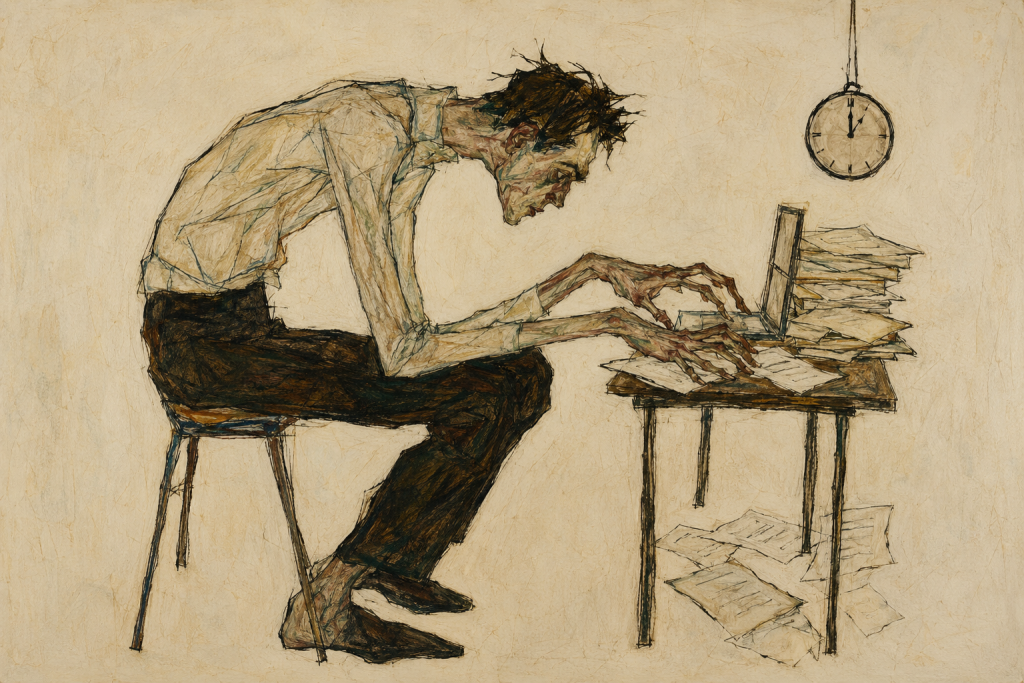
Why workaholism can resemble other forms of addiction, how constant work may become a way to cope with anxiety and emptiness, and why being busy does not always mean being productive.
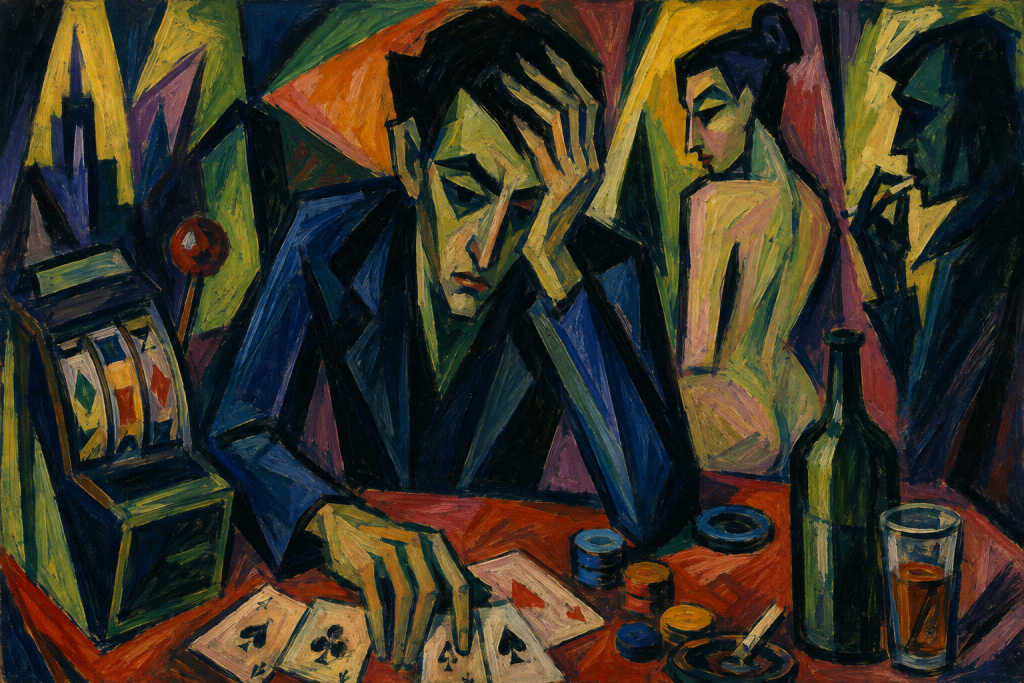
This also applies to gambling addiction. Some people who experience problems with gambling may also struggle with alcohol or drug use.
However, having a gambling addiction does not necessarily mean that a person will develop another addiction.
Why One Addiction Does Not Necessarily Lead to Another
Some people with gambling addiction never develop problems with alcohol, drugs, or other forms of addictive behavior.
One possible reason is that no other substance or activity produces the same experiences and sensations they get from gambling.
For such a person, gambling itself becomes the main source of intense emotional arousal, anticipation, risk, and hope of winning.
That is why it is important not only to consider the presence of addiction itself, but also to understand what psychological function it serves in a particular person’s life.
Gambling Addiction and Family Patterns
Research also points to certain family patterns.
Many people who struggle with gambling problems report that one or both of their parents had problems with alcohol, gambling, or other forms of addictive behavior.
This does not mean that addiction is inevitably passed from parents to children.
However, the family environment, ways of coping with stress, attitudes toward risk, money, alcohol, and gambling, as well as behavioral patterns learned in childhood, may influence the later development of addictive behavior.
That is why, when working with gambling addiction, it can sometimes be important to consider not only the individual, but also their family history.
How Common Is Gambling Addiction?
Gambling is available to millions of people, but gambling addiction develops in only a minority of them.
Most people are able to treat gambling as entertainment and maintain control over the amount of time and money they spend.
A problem begins when gambling starts taking up more and more space in a person’s life and gradually pushes aside other interests, responsibilities, and relationships.
Signs that gambling may be developing into an addiction include:
- persistent thoughts about gambling;
- increasing the size of bets;
- trying to win back money after losses;
- being unable to stop at the planned time;
- hiding gambling behavior from loved ones;
- debts and financial difficulties;
- irritability or anxiety when unable to gamble;
- continuing to gamble despite obvious negative consequences.
It is important to understand that the severity of gambling addiction is not determined only by the amount of money lost or how often a person gambles.
What matters more is how much gambling has begun to affect the person’s life and how much control they still have over their behavior.
When Does Gambling Become a Problem?
Simply taking part in gambling does not automatically mean that a person has an addiction.
The problem begins when gambling gradually stops being entertainment and starts taking on a more important role in the person’s life.
They may think about gambling more often, increase their bets, try to recover previous losses, hide what is happening from their family, or continue gambling despite financial, emotional, and social consequences.
Over time, gambling may become the main way of experiencing strong emotions, escaping boredom, reducing anxiety and tension, or avoiding difficult life situations.
That is why, when assessing gambling addiction, it is important to look not only at how much a person gambles, but also at what is happening to their life as a result of gambling.
Conclusion
Gambling addiction can occur together with alcohol, drug, or other forms of addiction, but this combination is not inevitable.
Addictive behavior develops differently in each person and may serve a different psychological function.
Effective help therefore involves not only stopping gambling, but also understanding what the person was getting from it, what emotional states or needs it was replacing, and what factors were maintaining the addictive behavior.
Working with these mechanisms helps a person do more than simply stop gambling. It helps them gradually build a life in which the need to return to gambling becomes significantly Workaholism can easily be mistaken for responsibility, ambition, and love for one’s profession. A person works long hours, rarely rests, is constantly busy, and takes on additional tasks. From the outside, this often earns admiration: “Now that’s someone who really knows how to work.”
But there is an important difference between a person who loves their work and a person who becomes dependent on it.
The first works because they want to achieve a result.
The second increasingly needs simply to keep doing something.
This is where workaholism begins to resemble other forms of addictive behavior.
Work as a Way to Regulate One’s Emotional State
In substance or behavioral addiction, a person uses a particular substance or activity not only for pleasure. Over time, it becomes a way of coping with their inner state:
- anxiety;
- emptiness;
- loneliness;
- a sense of being unnecessary or unimportant;
- tension;
- unpleasant thoughts;
- the inability to be alone with oneself.
In workaholism, work begins to serve this function.
As long as the person is busy, they feel better. There are tasks, calls, meetings, deadlines, and emails. There is no need to stop and notice what is happening inside.
But when the weekend or a vacation begins, restlessness appears.
The person does not know what to do with themselves. They start checking work emails, calling colleagues, or inventing new tasks. Sometimes they say, “I just don’t know how to do nothing.”
But the question may go deeper:
What happens to me when I have nothing to do?
An Addiction Society Approves Of
This is one of the distinctive features of workaholism.
When someone develops an alcohol or gambling addiction, sooner or later the people around them begin trying to stop them. The consequences become visible and cause concern.
A workaholic, by contrast, is often rewarded.
They arrive earlier than everyone else.
They leave later.
They take work home.
They answer messages at night.
They work on weekends.
They take on other people’s responsibilities.
At first glance, such an employee may seem extremely valuable to a manager. They are always available, take on a great deal, and almost never say “no.”
As a result, the problem can remain unnoticed for years. Moreover, the person receives constant reinforcement: praise, the status of being indispensable, appreciation from management, and a sense of their own importance.
Gradually, a formula that is very convenient for the addiction may develop:
“As long as I am working, I am needed.”
Working More Does Not Mean Achieving More
There is another side of workaholism that is often overlooked.
A workaholic may genuinely work a great deal. But the number of hours spent working does not necessarily mean greater effectiveness.
Gradually, the process of constant activity itself becomes more important than the result.
Something has to be done.
Something has to be checked.
Something has to be redone.
Someone has to be called.
New tasks have to be created.
Completed work has to be revisited.
A paradox emerges: the person works more and more, while their actual productivity may begin to decline.
Concentration deteriorates.
The number of mistakes increases.
Prioritizing becomes more difficult.
More time is spent on secondary tasks.
Excessive control develops.
Delegating becomes increasingly difficult.
Sometimes it no longer matters very much what exactly the person is doing or whether it really needs to be done.
The important thing is not to stop.
In this sense, activity gradually stops being a means of reaching a goal and becomes the goal itself.
Why the Quality of Work Begins to Suffer
Human attention, memory, and decision-making ability all have physiological limits.
If a person regularly works 10–12 hours a day, does not rest, sleeps too little, and remains constantly engaged with work, their effectiveness will inevitably begin to decline.
But a workaholic often responds to declining effectiveness by working even more:
“I’m not keeping up, so I need to work longer.”
“I’m making mistakes, so I need to control everything more carefully.”
“There are too many tasks, so I can’t afford to rest.”
A vicious cycle develops.
The more exhausted the person becomes, the worse they work.
The worse they work, the more time they begin to devote to work.
Life Gradually Becomes Narrower
As with other forms of addictive behavior, one area of life gradually begins to push out all the others.
At first, the person rests less.
Then they see friends less often.
They spend less time with family.
They give up hobbies.
They stop noticing their own exhaustion.
Even when they are at home, psychologically they remain at work.
Conversations begin to irritate them.
Rest starts to feel pointless.
Loved ones begin to be perceived as people who are “getting in the way of work.”
Sometimes the person sincerely explains this as responsibility toward the family:
“I’m doing all this for you.”
But in such cases, the family often receives the results of the person’s work rather than their presence and involvement.
What Happens When Work Is Taken Away
A person’s condition during vacation, illness, unemployment, or retirement can be particularly revealing.
If work was important but still only one part of life, the person is usually able to shift their attention toward other areas.
But if work has long served as a psychological support system, losing it may trigger a serious internal crisis.
Anxiety, irritability, low mood, emptiness, and a sense of being unnecessary may appear.
A person may literally stop understanding who they are if they are no longer producing something or needed as a professional.
At that point, it becomes clear that the problem was not simply a great love of work.
For a long time, work had been helping the person maintain psychological balance.
The Goal Is Not to Learn to Work Less
The goal of working with workaholism is not to turn an active person into a passive one.
The problem is not the amount of work by itself.
Some people genuinely work a great deal, love their profession, build serious projects, and still remain able to rest, switch off, maintain relationships, and stop when the work is finished.
The main question is different:
Am I managing my work, or is my work gradually beginning to manage me?
If a person can stop only when they are completely exhausted, if rest produces guilt, if their sense of self-worth is measured by the number of completed tasks, and if the absence of work creates anxiety and emptiness, this may be more than simple diligence.
In that case, it is important to explore more than just the work schedule.
It is important to understand what happens to a person when they stop being busy, and what constant work helps them avoid facing within themselves.
If you recognize yourself in this description and notice that it is becoming difficult to slow down on your own, working with a psychologist may help you understand not only how much you work, but also why the need to remain constantly busy has become so important.weaker.
author: Hrachya Badalyan
About the author
Psychologist specializing in addictive behavior, including gambling addiction, as well as codependency. Uses a cognitive behavioral approach (CBT) to help clients better understand the connection between thoughts, emotions, and behavior, recognize triggers and automatic reactions that maintain addiction, and develop more stable coping strategies.
Specialist page: Hrachya Badalyan