Why recovery can feel emotionally empty at first and how to rebuild a fuller life without addiction
One of the most difficult tasks for a person in recovery is not simply to stop gambling, drinking alcohol, or engaging in another addictive behavior, but to rebuild their emotional life.
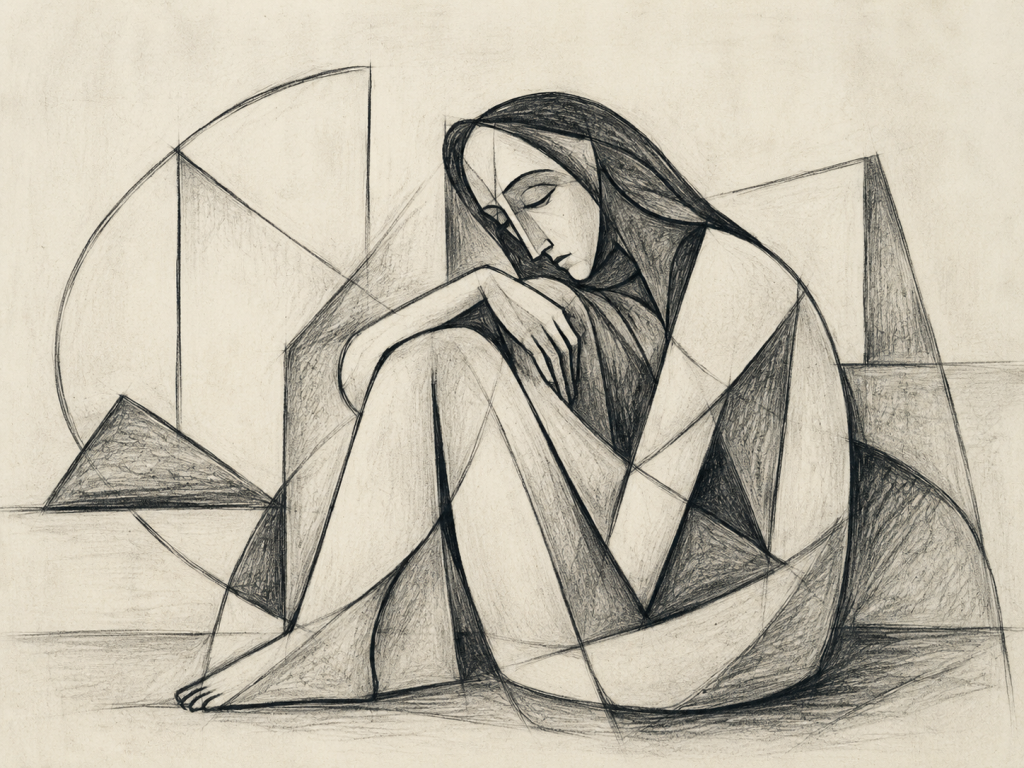
Life after addiction can initially feel unusually quiet, monotonous, and even empty.
After a long period of addiction, ordinary life can often feel too calm, monotonous, and even empty.
Work. Home. A conversation. A walk. Dinner. Meeting loved ones. A quiet evening.
In the life of a person without an addiction, most of the time nothing especially intense is happening. There is no constant excitement, no sharp emotional highs and lows, no expectation that something extraordinary is about to happen.
But a person who has lived with addiction for a long time becomes accustomed to a completely different emotional rhythm.
Addiction Becomes a Source of Intense Emotions
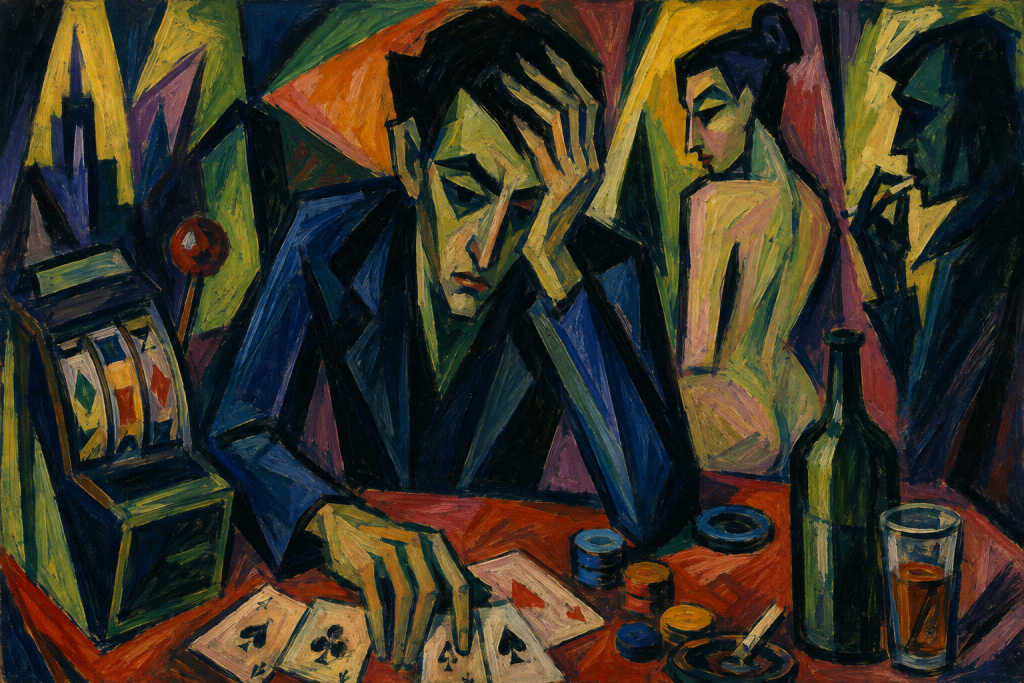
In gambling addiction, this may include:
- waiting to place a bet
- anticipating a win
- tension during the game
- fear of losing
- euphoria after winning
- despair after losing money
- hope of winning the money back
- feelings of guilt and shame
- promising yourself that you will never gamble again
- a new, powerful urge to return to gambling
With alcohol or other addictions, the mechanism may look somewhat different, but the emotional fluctuations can also become very intense.
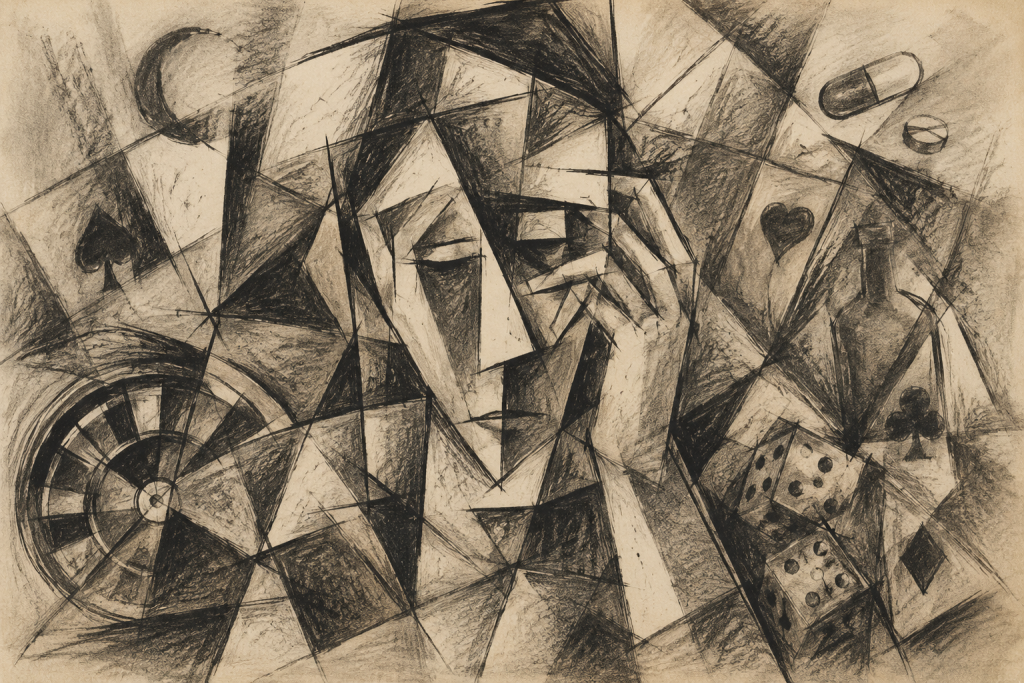
Gradually, a person begins to live between emotional peaks.
And addiction does not provide only pleasant experiences. It can bring excitement, hope, fear, relief, guilt, and despair.
This creates a paradoxical situation: the person is already suffering because of the addiction, is tired of it, and wants to stop — yet at the same time, the addiction remains one of the main sources of intense emotion.
Why Calmness Can Start to Feel Like Emptiness
When the addictive behavior stops, it is not only the behavior itself that disappears.
An entire emotional system around which life had been organized for a long time also disappears.
A person may say:
“I don’t feel like doing anything.”
“Everything feels gray.”
“At least something used to happen before.”
“I understand that I shouldn’t gamble, but now I’m just bored.”
Here it is important to distinguish between two things.
Calmness is not necessarily emptiness.
But for someone who has become accustomed to constant emotional stimulation, it can be difficult at first to feel the difference.
If interest was previously almost always connected with risk, excitement, or the expectation of a strong outcome, ordinary pleasure may seem too weak.
We All Tend to Intensify Our Emotions
This is not limited to people with addiction.
For example, why are joyful events so often accompanied by alcohol?
A celebration, a wedding, meeting friends, a success — and there may be a desire to make the experience even brighter.
Alcohol temporarily changes emotional state and the subjective perception of what is happening. A person may feel that joy becomes stronger, communication easier, and sensations more intense.
The problem of addiction begins when the need for such powerful emotional states takes up too much space and the person becomes increasingly unable to experience satisfaction without additional stimulation.
Why a Person Returns to Something That Causes Suffering
Sometimes, during a relapse, a person does not return only to gambling, alcohol, or another addictive behavior.
They return to a familiar emotional world.
A world where there is anticipation again.
Tension.
Hope.
Risk.
Fear.
Relief.
In other words, the feeling returns that “something is happening.”
That is why prohibition alone is often not enough.
A person can close gambling accounts. Stop buying alcohol. Restrict access to money. Avoid certain places.
These can be important measures, especially in the early stages of recovery.
But if an enormous emotional emptiness remains afterward, the risk of returning to the addiction may remain as well.
Recovery Is Not Only About “Stopping”
Over time, a person has to learn to live within a different emotional range.
Not to expect constant euphoria.
Not to see a quiet evening as meaningless.
Not to seek risk simply in order to feel alive.
Recovery involves gradually restoring the ability to notice quieter but genuine experiences:
interest
satisfaction
tenderness
closeness
curiosity
sadness
calmness
pride in oneself
pleasure from communication
the feeling of completing something
At first, a person may barely notice these states because compared with previous emotional surges they seem too weak.
But it is precisely from these experiences that a more stable emotional life gradually begins to form.
The Goal Is Not to Avoid Strong Emotions, but to Stop Depending on Them
The goal of recovery is not to spend the rest of life being calm and never experiencing strong feelings again.
Strong emotions are a normal part of life.
A person can fall in love, feel joy, experience victories and losses, take reasonable risks, enjoy sports, travel, and set difficult goals.
The problem arises when a person constantly needs an emotional peak just to feel interested in life at all.
Recovery therefore means gradually learning another way of living.
To tolerate calmness without interpreting it as emptiness.
To notice small moments of joy without demanding euphoria from them.
To feel interest without destructive risk.
To experience pleasure without the guilt and losses that come afterward.
And to begin noticing again the different shades of one’s own emotions that addiction may have muted for years.
At first, this kind of life can genuinely feel bland.
But over time, it can provide what addiction cannot: stability, freedom of choice, and the ability to enjoy life without constantly needing to intensify one’s emotional state.
author: Hrachya Badalyan
About the author
Psychologist specializing in addictive behavior, including gambling addiction, as well as codependency. Uses a cognitive behavioral approach (CBT) to help clients better understand the connection between thoughts, emotions, and behavior, recognize triggers and automatic reactions that maintain addiction, and develop more stable coping strategies.
Specialist page: Hrachya Badalyan