Why anxiety, shame, and repeated mental replay can appear after drinking alcohol, and how reassurance-seeking can reinforce the cycle
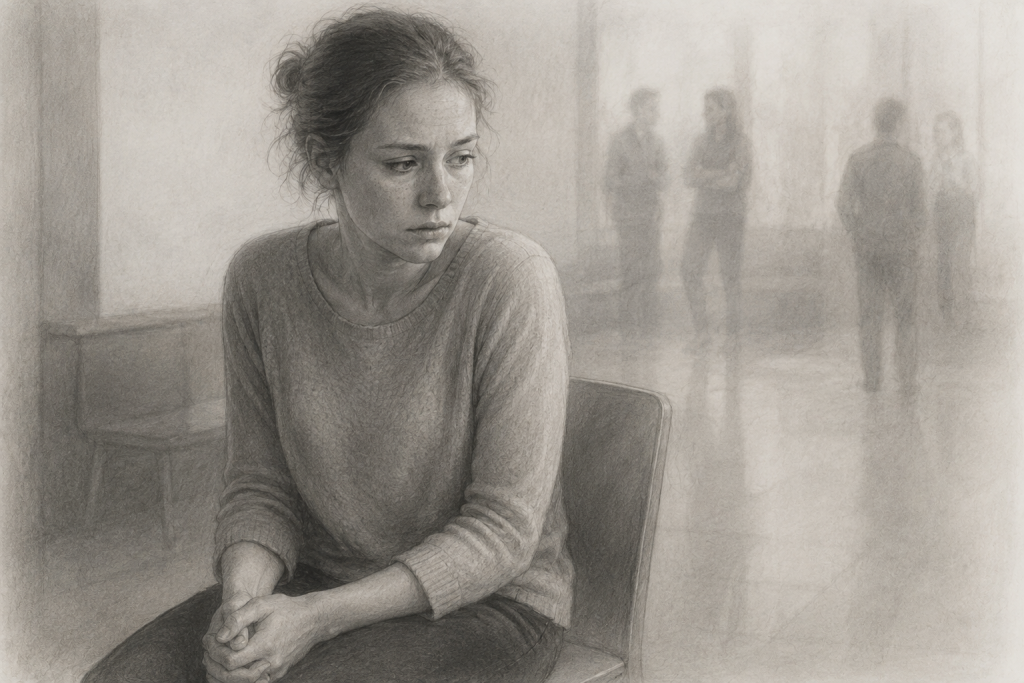
After drinking alcohol, some people experience more than an ordinary hangover.
They wake up in the morning and immediately start trying to reconstruct the previous evening.
“Did I say something I shouldn’t have?”
“Did I offend anyone?”
“Why did I say that?”
“What do they think of me now?”
“What if I made a complete fool of myself?”
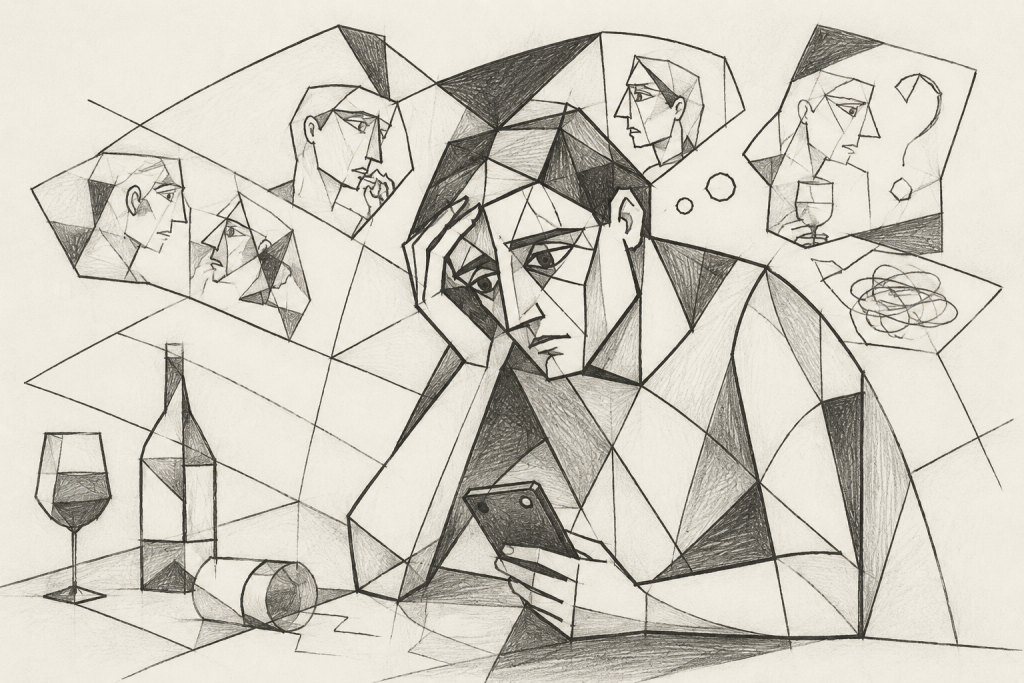
They recall fragments of conversations, facial expressions, and their own behavior. If part of the evening is missing from memory, the anxiety becomes even stronger.
Then they start texting or calling people who were there:
“Was everything okay yesterday?”
“Did I do anything strange?”
“Did I offend anyone?”
When someone replies, “Everything was fine, don’t worry,” they really do feel calmer for a while.
But not for long.
Why Anxiety Appears After Alcohol
The reason is not only that the person may actually have said or done something inappropriate.
After heavy alcohol use, both physical and emotional states change. The next day may bring anxiety, irritability, low mood, and guilt.
If the person also remembers only part of the evening, another problem appears — uncertainty.
They simply do not know what happened.
And the mind often tries to fill uncertainty with assumptions. If a person is prone to anxiety, those assumptions are usually not reassuring.
“If I don’t remember it, something bad must have happened”
Then begins the attempt to reconstruct the evening piece by piece.
What Is Post-Event Rumination?
Post-event rumination is the repeated mental replay of something that has already happened.
A person returns to the same conversation again and again:
“Why did I say that?”
Then they remember the other person’s reaction:
“He looked at me strangely. I probably offended him”
After a while, another thought appears:
“What happened after that? Why can’t I remember?”
The person believes that if they think about it a little longer, remember every detail, and analyze everything correctly, the anxiety will finally disappear.
But often the opposite happens.
The more they analyze the situation, the more reasons they find to worry.
The cycle is fairly simple:
anxiety → memories → analysis → self-criticism → even more anxiety
Why Do You Want to Ask Others, “Did I Behave Normally?”
This is also an attempt to get rid of uncertainty.
The person feels better when someone says:
“Yes, everything was fine”
The problem is that this relief is usually temporary.
Soon another thought appears:
“Maybe he just doesn’t want to tell me the truth?”
Or:
“Okay, everything was fine with him. But what did I say to someone else?”
And another reassurance check is needed.
Gradually, the person becomes used to managing anxiety not independently, but through constant reassurance from other people.
It Is Especially Difficult When There Are Memory Gaps
If a person remembers the whole evening, they can at least evaluate their own behavior.
With memory gaps, this is impossible.
And this creates an unpleasant paradox: the person keeps trying to remember something that may simply not be stored in memory.
They return to the same period of the evening again and again, but never recover the full picture.
Anxiety demands certainty:
“I need to know exactly what happened”
But one hundred percent certainty may be impossible to obtain.
As a result, the search for an answer can continue for hours, and sometimes for several days.
Then It Gets Easier
A few days pass.
Nothing catastrophic has happened. People continue communicating as usual. Everything is normal at work. No one is making accusations.
The memories gradually lose their emotional intensity.
And the person starts telling themselves:
“I just drank too much”
“It happens”
“Nothing terrible happened”
The anxiety subsides.
It seems that the problem is over.
But if similar episodes keep repeating, the pattern itself can become reinforced.
After another drinking episode, the person wakes up anxious again, reconstructs the previous evening again, checks themselves again, and seeks reassurance from others again.
Over time, the habit of constant self-checking may extend far beyond situations involving alcohol.
What If Alcohol Is No Longer the Main Issue?
Sometimes a person is no longer intoxicated and may not even be drinking at all, but they continue to analyze ordinary social interactions in the same way.
After meeting people:
“I probably said something wrong”
After a conversation:
“Why did I even say that?”
After sending a message:
“Why did he reply like that? Maybe I upset him somehow?”
The person returns to the conversation, rereads messages, analyzes tone of voice, facial expressions, and their own words.
The situation changes, but the way of dealing with anxiety remains the same — checking yourself again and again until you feel calmer
At this point, the problem may no longer be mainly about a particular evening, but about an established anxious way of thinking.
What Can You Do About It?
The first step is to notice the pattern itself.
Not every unpleasant episode needs to be analyzed dozens of times.
If you really offended someone, you can acknowledge it, apologize, and draw conclusions.
If you do not remember part of what happened, endless attempts to reconstruct missing memories will not necessarily give you an answer.
Most importantly, pay attention not only to the content of your anxious thoughts, but also to what you do when those thoughts appear
How many times do you mentally return to the situation?
How many people do you ask whether everything was okay?
How much time do you spend trying to achieve absolute certainty that nothing bad happened?
Because sometimes the problem is no longer what happened yesterday, but the inability to stop checking it today.
And if these states regularly appear after drinking alcohol, it may be worth asking yourself one more question:
Why does alcohol continue to have a place in my life if I have to spend several days paying for it not only with my physical condition, but also with my anxiety?
author: Hrachya Badalyan
About the author
Psychologist specializing in addictive behavior, including gambling addiction, as well as codependency. Uses a cognitive behavioral approach (CBT) to help clients better understand the connection between thoughts, emotions, and behavior, recognize triggers and automatic reactions that maintain addiction, and develop more stable coping strategies.
Specialist page: Hrachya Badalyan